
28 March- AGM, again on floor 2. No Zoom .
Let's hear your opinions. What did you loke / not like. What would you like next year?
21st March. Several speakers this year made encouraging suggestions about photo projects. Grace and Lorraine gave us examples earlier in the season and tonight was the night for the rest of us to show ours. Now , projects require a certain level of organisation and not everyone is organised. Some folk are project managers and some, well, some ...are carefree and devil-may-care, which being translated, means they're not. There was a certain air of having been "cobbled together at the last minute" about some of our projects, but there was certainly a diverse range- cataloguing seeds, nature photography, practical origami (or was it bookmaking?)how to sell photos at the exhibition and paperback book covers that don't exist- but surely they must? Revelation of the night surely was that we have a published thriller author in our midst- and is there a sequel to come?
14th was the annual competition. The rearranged category / group rules allowed for a wide choice of subject and for once, a majority of people went for some degree of abstraction, ICM, extensively edited or composite images. In Lorraine Robins we had a judge who said she liked that sort of thing and maybe was expecting creative editing in some shots which were actually just as shot.
This sort of uncertainty is understandable and is likely to grow commoner. As editing gets ever easier and more powerful , it is not just allowed, but assumed: Hardly a judge this year has failed to point out where editing might "improve" a competition image. Nonetheless, only one of the judge's favourite three images was a composite- Grace's image of lilacs at Newhailes. The other two were a classic sports image of lads playing rugby and a low angle nature shot of fungi on frosty grass. While both were likely cropped and sharpened , editing of both would be considered minimal. The winning shots will be in a gallery , here.
It will be interesting to see if there will be a continued trend towards editing for creative effect and away from more traditional landscapes and portraits, or whether the sort of AI assisted hybrid imagery we saw last week will take over- or maybe scunner folk to the point where we all revert to collodion processed plates.
Andy and Philip were joint winners of the Annual Trophy as they both scored 56 points but the judge’s choice for best DPI were:
1st Jon
2nd Andy B
3rd Grace
+++++++++++++++++++++++++++++++++++++++++++++++++++++
7th March. A good turnout, despite threats of snow, for tonight's members' night. Lorraine took charge , Grace being on the high seas, pushing through pack ice off Portugal or somewhere. (That's why you can't buy tomatoes in Tesco).
Mike gave us a selection of shots from a night time photo class in Edinburgh with Rich Dyson, whom many of us have encountered. Rich has been doing these tours for years and he has a lot to offer. I admired the glorious sunset from Calton Hill and was particularly impressed by the quick change to the reality of a dull Auld Reekie evening. You win some, you lose some.
I liked both versions of the Barries Close pic. I think the best time for B&W is when shooting at night. You are likely to be seeing in B&W, so if you want an accurate image of what you saw, that is the way to go. That said, the light flare in the colour version didn't seem excessive to me either and the mossy green wall was rather nice. This sort of experience with a guide who knows his or her stuff can be a lot of fun and very informative. Mind you, I've never understood how "hyperfocal distance" is supposed to work. Topic for a project perhaps?
Harry gave us some wildlife at Aberlady . That Buzzard looked pretty grumpy, probably worried Harry was after its dinner. The magpie was taking a bit of a chance; it might have made a nice wee entree. I recall Bob King being a big fan of using the NIK suite for editing monochrome. I'm awaiting the version that adds colour to it. The HDR-ish version of the cement works looked really solid and gritty. The smoke from the chimney looked like it was made of concrete too.
Elaine gave us a tour around Seahouses in Northumberland, a good base for exploring that coast from Lindisfarne down to Amble and Warkworth. Lifeboats, rocks, castles, harbours, old boats, upside down boats, fish & chips. There's a lot to see and photograph in the area . After the disastrous avian flu in 22, it looks likely the Farnes will still be closed in Spring 23, though sailings around the islands will be allowed.
After tea, Rudy gave us a very new perspective of landscape photography- one in which most of the landscape is vertical! A winter walk in the southern alps near Lake Devero is not a stroll in the park. Rudy said he takes one camera, one lens. It's easy to see why. It is not a place to be struggling with a pile of gear- or swapping lenses. The solitude of this sort of photo trip is perhaps as important as getting a particular shot, but the chance to photograph Chamois and Ibex must be pretty amazing. I was really surprised to see a Dipper in deep snow at altitude- as nearly as I could see, the very same bird we see along the Tyne, rarely far from a river. Just the snow alone was pretty astonishing. How long is it since we had snow like that, even in the highlands?
Norm had a question to ask us. Is an image created using "Midjourney" or other AI software actually photography? There has been a progression - some might say a slippery slope - from the days when all photographers developed and printed their own plates, through the stage when most folk sent films off for processing, then the jump to digital, becoming ever farther from any chemistry. A JPG , "straight from the camera" is already processed, just not by the photographer - and while we may edit a raw image, the technology which we use becomes ever easier, ever more capable. We can even use online "neural" filters and presets to achieve almost any effect. So now, in perhaps the final stage of "virtualisation", we need only tell an AI what we want and it will create it. (Up to a point). But where's the fun in that? Where's the memory of the hike in the mountains?
Maybe we should all stop taking photos and learn to paint? Or is this just another minor improvement we will all take for granted in a year?
+++++++++++++++++++++++++++++++++++++++++++++++++++++
Tuesday 28th February- Two months into 23! Another interesting speaker in Warren Alani, who gave us a mostly monochrome talk called "Seeing is Believing", in which he showed us a selection of his award winning images, but then moved onto the kind of images he takes for his own enjoyment rather than to fit the requirements of judges and salons.
Now it is no secret that your scribe does not love mono. I paid good loot for a colour camera and I want colour pictures; but done well, I'll admit mono can be almost as good as colour - and here we had a lot of mono done very well, with a distinct personal style. Warren likes legs, even just bits of legs, because if you can see the legs, you can reasonably infer the rest of the person (or statue), so why show anything more? Legs with dogs, leg shadows, Ghandi's (statue's) legs, with a bystander's legs in the background. A lot of his street scenes have chopped off legs as a border between subject and the rest of the world. Judges would HATE IT! Yay! He's also a staircase fetishist. We all love a spiral stair and he had some grand ones here, plus the S.F City Hall grand staircase from "Dirty Harry". Lots of clever architectural shots and some very quirky takes on sports shots. (The tennis legs with racquet and ball shadow is particularly memorable). I liked pretty well all of Warren's pictures. Would they be better in colour? For him, no. For me, yes in some cases. You will have your own ideas. Different strokes for different folks. That's the fun of photography. "Sitting at a balcony with a camera and a glass of wine"- I can relate to that. Another enjoyable evening.
Tuesday 21st was a Zoom talk- the appropriately named Steve Hedges spoke about garden photography. There was a lot here, starting with an introducytion to concept and practice of macro photography, pulling back to close-up and on into wider garden and woodland photography, with discussion of lighting, image stacking, composition- above and below 1:1, it's much the same. Well laid out, covering a lot of ground, this was a talk worth hearing. It's a bit unfortunate this one wasn't recordable, as it would pay a second look at the detail.
I missed the Nature competition this year. I somehow also missed an email with the three winning pics attached. Here they are.
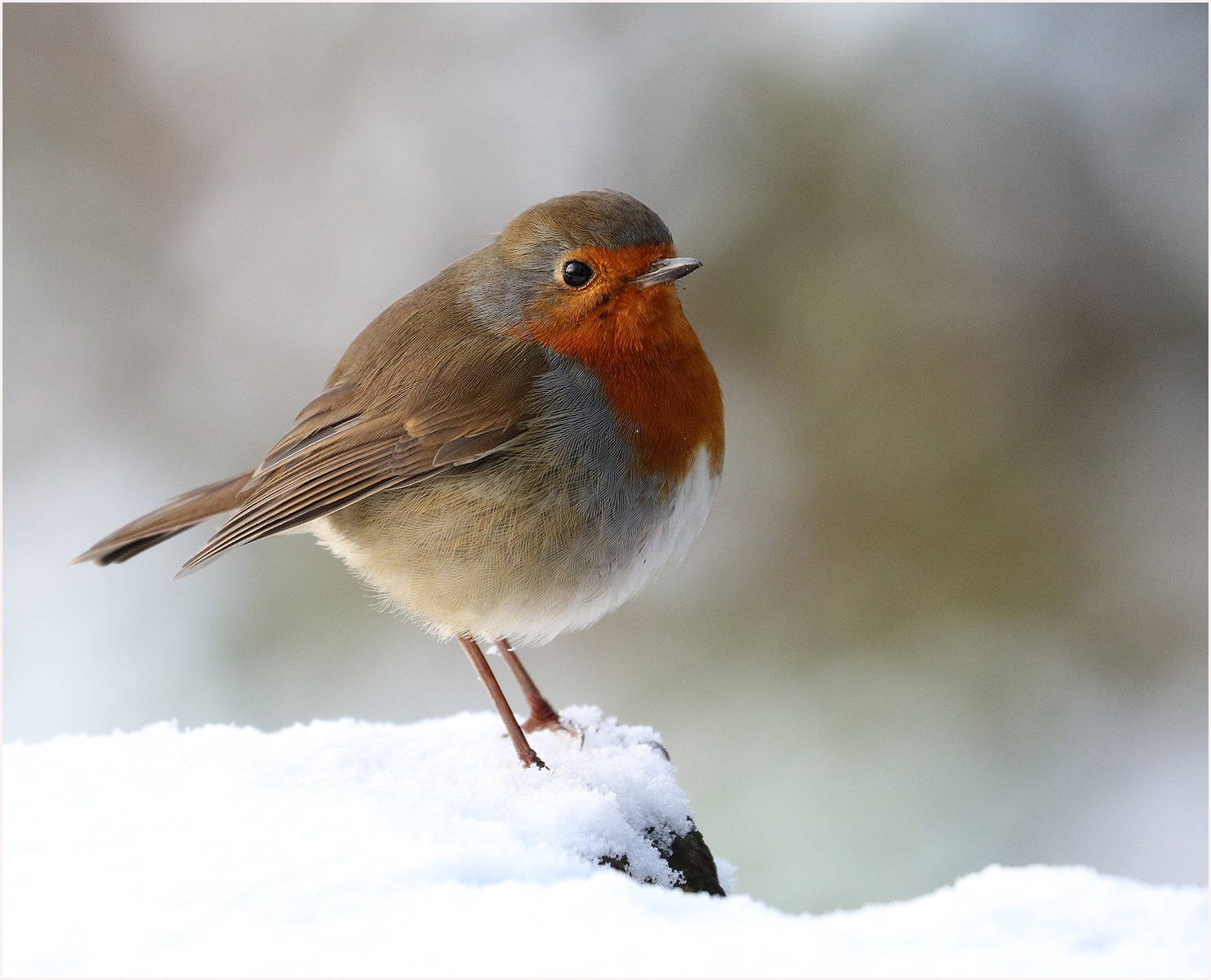
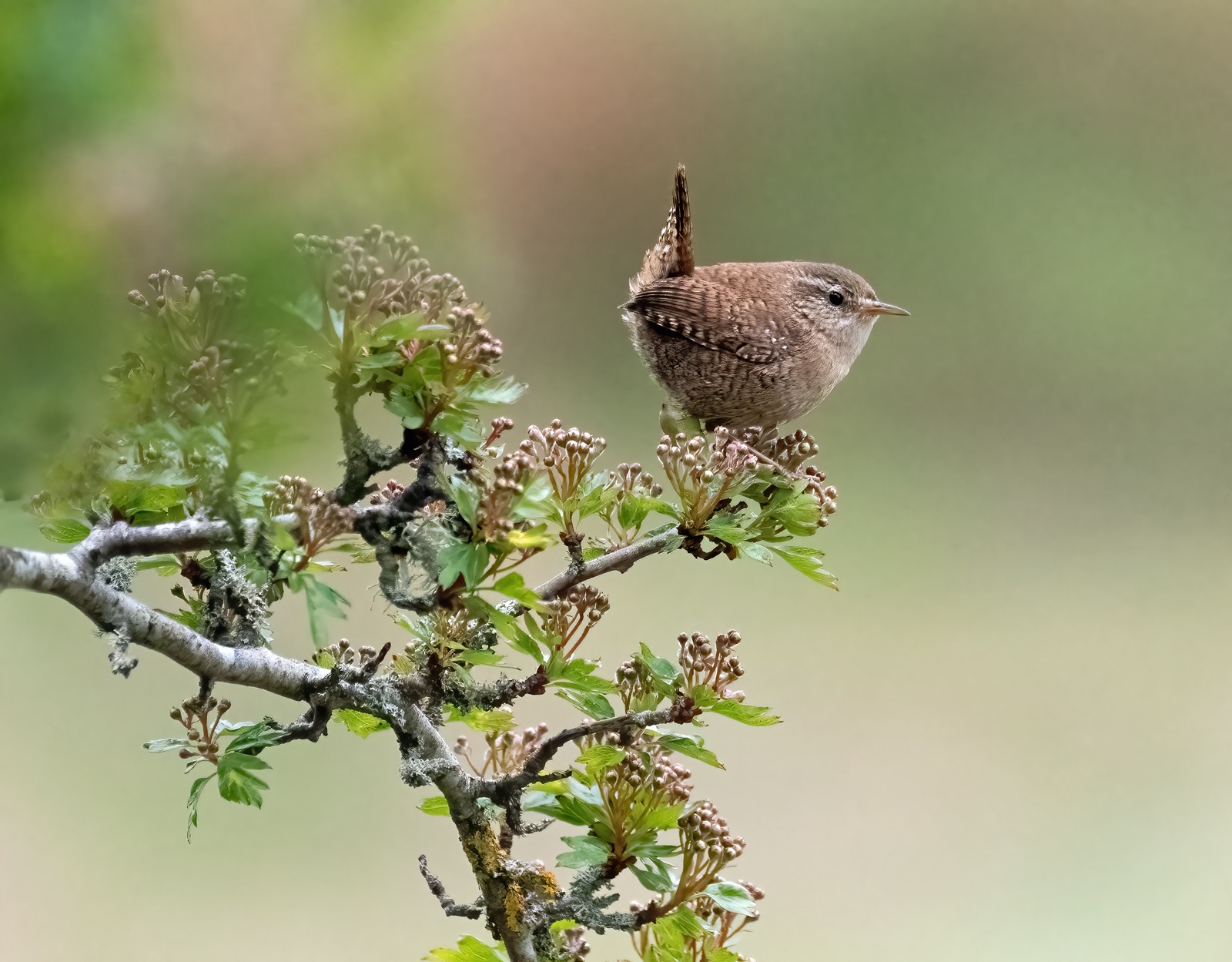
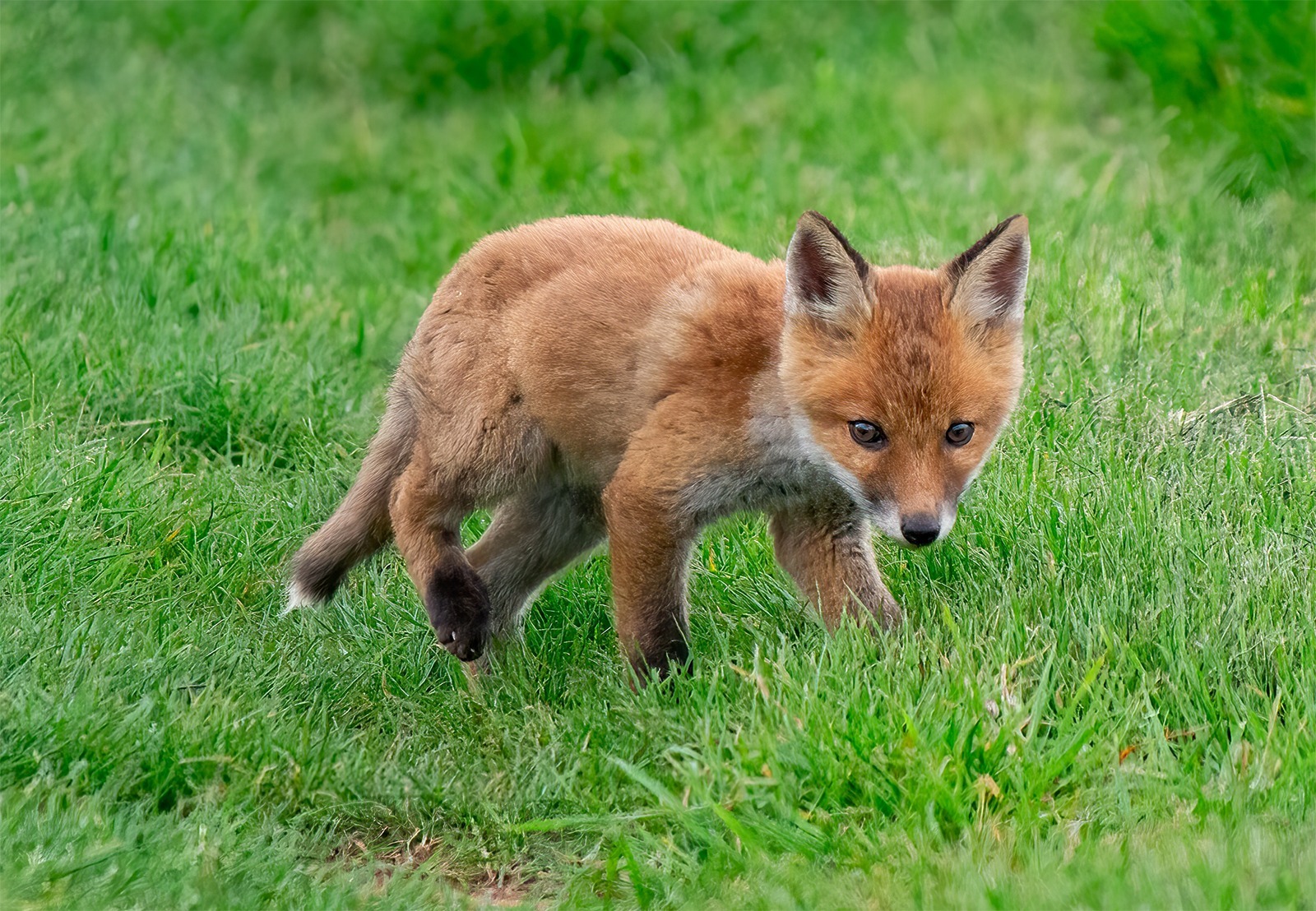
In Thursday's "Match an Image" competition with North Berwick, we came second. Or last , if you prefer. Some nice pics from both teams. My favourite image of the night was a NB night shot of the starry sky over Tantallon, with a fire over in the direction of Dunbar looking like a false sunrise, creating a really unusual effect.
NB have a new (or relatively new) projector, which showed just how big the improvement in technology has been since we acquired the SX80 in 2011, so we are seeking advice about a replacement for the Canon.
Tuesday 7th was the Monochrome competition.
1st - Andy Bennetts with a total score of 59
2nd – Sally Anderson with a total score of 57
3rd – Jon Moore with a total score of 53
The judge was Darren Pullman, who judged for us a decade ago. Darren likes symmetry and commented a couple of times that a symmetric shot must be symmetric, not nearly symmetric. Here's a link to one of his own, looking a bit like a scene from "2001 A Space Odyssey" to illustrate his point. http://www.pullmanphotography.co.uk/prints/various/tube.html
Darren's judging style is personal and I rather like it. He also goes by the categories. Just because there is landscape in a shot doesn't make it A Landscape Photo in his book- and I agree. If there is a category, the image should fit- or why bother with categories?
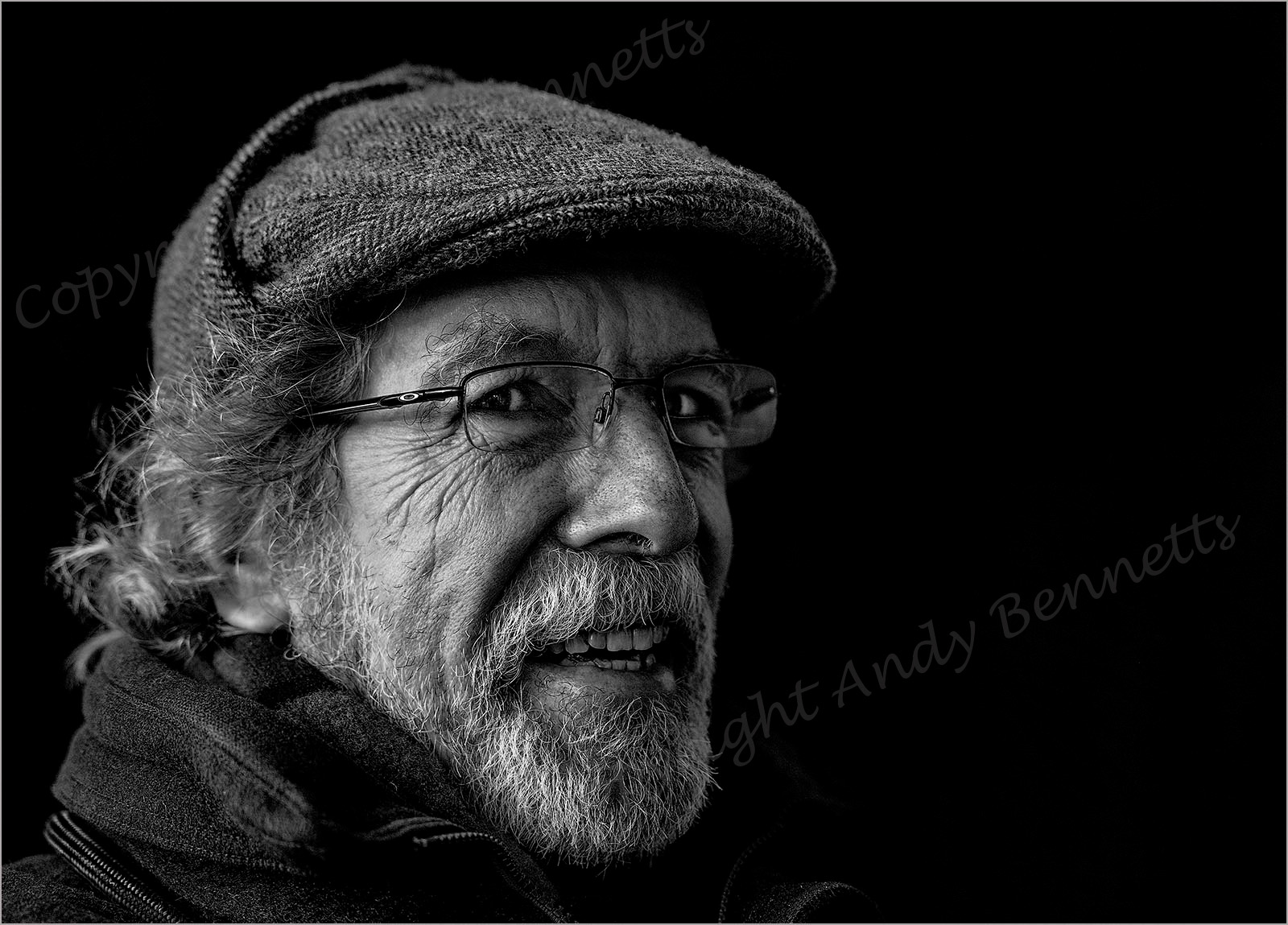
No matter who judged the competition, I think the scores would have been about the same. Andy's portrait of neighbour Drew for instance (below) is not only a fine portrait, but one that would gain very little from being in full colour. I think it still would gain, but that's why I'm not a judge and why I don't do B&W.
Thursday 2nd Feb. was the "Match an Image" competition at North Berwick. Nice to see some familiar faces there, some not seen since before covid. This was NB's third MaI of the session, so they are getting a bit too good at it. Next time , we need frogs.
There was as much robust complaining as is traditional at MaIs and a good time was had all round. It was also interesting to compare NB's modern Epson projector with our borderline antique Canon. One interesting statistic online is that the Canon SX80 when new had a 1:900 contrast ratio, whereas the Epson FH-52 has 1:12000 ! Not sure exactly what that means, but it's a good excuse for the defeat. So we are , not before time, on the hunt for a replacement.
Jan 31st- was a members' night. Harry demonstrated the two-layer technique for specific edits in Photoshop. This works just as well in Harry's Version 5 as it does in the latest releases. Using a blank layer to do cloning is an idea so obvious that I'm kicking myself for never thinking of it. Sally asked if it's possible to do multiple different edits on the same copy using a layer mask. Yes it is, but it can get complicated. Best to do one per layer if possible, then flatten them when done. It's easy to get lost , unless layers are conscientiously named.
The critique feature almost went awol, as nobody actually brought the pictures to be assessed. The Poldrate wifi came to the rescue as Grace was able to WeTransfer her copy from her phone to the laptop. I really must learn to use the phone one of these years.
AS has been observed before now, the projected image seen on screen is neither as sharp nor as bright , or as contrasty, as that on the laptop. While it's arguable that a projected image will never exactly match a TFT monitor, it may be we can get them closer. Maybe we need to replace the projector bulb, or indeed, the projector. Maybe we need to set aside some time one evening to experiment.
WE received confirmation of the date of the 3 way competition (23rd Feb) very late. The hand in is this weekend. Rather than ask for images so late, Elaine will pick 15 from the winning or high scoring entries in this year's club competitions to date.
++++++++++++++++++++++++++++++++++++++++++++++++++
Jan 24th Was a Zoom talk by Karen Thorburn, featuring landscape and wedding photography.
17th January presented a full programme in Poldrate. We had a tour of the Assynt / Coigach area and the Summer Isles from Mike, a presentation on Abstract & Conceptual Photography from Lorraine, "Five " photos from Elaine and A presentation from Philip on Street Photography as practised by Matt Stuart. We also had the annual Nature Competition, which was won jointly by Harry Paton with "Robin" and Elaine Dowding with "Posing wren". Third was Ian Smith with "On the prowl".
I've looked for the "Abstract" and "Conceptual" buttons on my camera, but I can't find them. There is a "Point & Squirt" button which is the one I use. Mike's pics of the north west had me thinking it's been too long since I was up that way. We squeezed Philip's talk in at the end and probably should have held it over, as it covered a lot of ground. I hadn't heard of Matt Stuart before. Quite apart from some interesting street photography views, Philip's talk suffered an unusual problem with font formatting in Powerpoint which has had several of us guessing since about the cause. Lorraine reckons it's a template issue and she will give us a seminar on the subject when time permits. There are often oddities when Powerpoint presentations are created on one machine, then shown on another, especially if one is an Apple and one a Windows PC and even more so when it's shown on a machine that doesn't have MS Office. As a non PP user, I for one will appreciate a few pointers.
10th January in Poldrate was our first meeting of 2023. The first activity of the evening was flash portraiture, with a lighting setup on loan from Andy Bennetts' son Calum, who is a professional photographer. This included two powerful lights with diffuser hoods and optical sensors which triggered the flash of both lights when they detected a smaller flash.
One disadvantage of optical triggers is that when multiple flashes are going off frequently, the sensors can have a nervous breakdown. The big advantage of mains powered units is the minimal recharge time. The other disadvantage is actually sitting in the hot seat, being blitzed by paparazzi-style flashes. Modelling is tough.
Andy also had a roll of "bland background" material installed behind the hot seat. Compared to portraits done at home using a single flash, the results of this setup were of very good quality, including some taken on a cellphone.
We then had the in-club judging of the cellphone challenge, which was won by Tony Reeves, with a view of Glen Etive. Roni's talk on cellphone photography seems to have had an effect, as the standard of images looked pretty high. There's no doubt cellphone cameras get better every year and are arguably producing results as good as mid range dedicated cameras of just a couple of years back. The small sensors may not gather much light, but there isn't a lot of fancy glass in front to soak a lot of light up- and there's a load of processing power available.
20th December was the Christmas Quiz.
Quizzes are simple. Unlike exams, you don't need to show your working. The questions are really easy .It's just knowing the answer that can be tricksy. So who knew the Duke of Wellington had his photo taken? Louis Daguerre was 28 when Waterloo was fought and people were experimenting with the technology by the 1830s. It was a close thing- had history been a bit different, we might have a photo of The Iron Duke triumphant on his horse. Here's the bronze version on Brexit Day in Glasgow. Congrats to Sally A who scored 29 out of 40. That's more than I got, and I set it.

13th December 22.
Three elements this evening. First, Michael showed us some of his "Curling pond" shots. It used to be said of East Lothian that the people golfed in summer and curled in winter- indeed it was true of much of Scotland. Climate change has done for outdoor curling and most of the ponds have long reverted to nature. As a photographer of historical locations and changes, Michael has recorded several.
Then Colin showed us a location- his study. Maybe we should all drop in one day. We know there are biscuits. Obtaining the sort of macro images Colin does might be expected to involve major expenditure on high tech gear. Colin uses elastic bands, extension tubes, a clip on hand lens and back to front lenses. Oh- and bits of a microscope. The results speak for themselves, though the rear ends of flies might not be everyone's favourite subject.
Then we had the Jubilee competition, judged by Andy Bennetts, won by Sally A with Sally H and Philip close behind. As the total scores only ranged from 47 to 54, it was a close run thing - but will we ever learn if the flames from the cannon were Photoshopped in? (They weren't! It seems when firing a multi-gun salute, the officer having his hand up means "Get ready for the next one.")
++++++++++++++++++++++++++++++++++++++++++++++++++++++++
We had 6 entries for the audiovisual competition on December 6th. First thing we learned is that we need to improve the sound reproduction quality. Modern A/V is really easy to do, compared with how it was in pre digital days. As most recent cameras do decent quality video, it seems likely the A/V format will give way to videos at high resolution. We may have to consider getting a new projector, too.
The first-past-the-post vote by a single point gave the victory to Michael Harvey with"Flamingo Waltz" , which included some rather fine natural history shots in their own right. Runner up was Ian Smith's "Astro tour". Ian's specialist photography produces very high res images and it would be nice to see them projected at 4K, which still wouldn't match the original resolution.
Andy Bennets then gave us a talk on the uses, misuses and abuses of light, both natural and artificial, with illustrative photos. This is a "taster" for January 10th when we will get to experiment with lighting.
Michael Harvey then gave us a photo location with a range of views of Belhaven's famous "Bridge to Nowhere" in different conditions of light , tide and weather. I was rather taken with his 5 shot HDR image, which used the dynamic range extension the way it should be used, to deal with difficult lighting, not to produce something unrealistic and over the top, as HDR can be.
Belhaven is a good location for people too- there's often a lot going on there.
Colin was also scheduled to talk tonight, but he agreed to do his thing next week. Was that a microscope I saw? What has he in store for next week?
++++++++++++++++++++++++++++++++++++++++++++++++++++++
On Nov 29th , we had a Zoom talk from Chris Upton, whose website is here.
His talk was essentially a Back-to- basics crash course in how to move from taking the sort of good photographs all modern cameras can do, to taking images that stand out from the crowd. The secret, as is always the case, is preparation.
I doubt there was anything in this talk that we have not heard before, given most of us have been taking photographs for decades, but there was a huge amount of practical advice that we need to be regularly reminded of, because having heard it somewhere isn't the same as actually doing it.
Starting with knowing your gear, Chris stressed that knowing how to access the features of your camera quickly is critical if opportunities are not to be missed. We all know where the brake pedal in the car is, without having to consult the manual. We should be equally familiar with the tools we use in the camera, without needing to sort through pages of menus, by which time the shot may be lost. The multi functional capability of modern cameras means there is a lot more to learn than in the Box Brownie days. (Sadly, the same is increasingly true of modern cars).
Preparation for a shoot was another of his points- have near home locations in mind and go there when light and weather conditions are suitable. Write a list of what you need to take and what you aim to do. Take the gear you need and only that. Use the appropriate lens for the subject- telephotos to isolate subjects and limit depth of field, wide angle if foreground is critical, and don't be scared to do panoramas where a wide angle would lose distant or small objects. Meter as the subject requires- over expose in snow or similar scenes where part of the image is very bright, under exposing may be necessary in low light, even if it does mean a bit of noise in the shadows; bracket and average to increase dynamic range and reduce noise. Use the blue or golden "hours" for the light. Know the result you want before you take the picture. Inspect the scene from different angles , then decide which viewpoint and angle suits your intention. Plan ahead. Then get out there and do it.
There was a great deal of advice in this talk. I'd suggest everyone should review the video , maybe more than once, as there was a lot to remember. Most of us will be familiar in theory with much of what Chris said, but we need to be reminded to actually practise it. As a two hour primer in how to get really good images, this was certainly value for money.
+++++++++++++++++++++++++++++++++++++++++++++++++++
23 November 22
Mobile phones turn over new models at least once a year. Cellphone cameras get better with every model and they do computational photography which improves with every software update, which may happen two or more times annually. They charge from USB, fit in a pocket and upload direct to the Net. What's not to like?
People phone you on them, is my primary objection. Nobody, ever, calls me on my camera. Having accepted that overwhelming failing, they do have a lot going for them. Most impressive effect of the night for me was when Robert pointed his phone at the empty wine bottle and it told him where and at what price it was on sale. Not actually a photographic plus, but impressive.
Roni , Lorraine and Elaine had a range of test subjects set up for us to practise the sort of tricks Roni talked about . And snap we did. I knew , in theory, a bit of what phone cameras could do, but I was surprised and impressed by the variety of features. How many I would really use is a valid question, but it doesn't hurt to know it's there. Selecting a single frame from a video for example looks far easier than on even a mirrorless camera.
We will have the rescheduled Cellphone Challenge early in 2023, by which time we will all be up to scratch with live photos (which sound very like Olympus "Pro Capture") and lens flipping, mirroring and app(et) ising. In theory.
An informative and fun evening.
15th November.
This was the annual theme competition, judged by Peter Wells.
The theme this year was "Storytelling". The number of entries was smaller than usual, at only 14. As usual, we did not require symmetrical triptychs, but Peter rather neatly judged the grouped, three image photos, out of 10, while scoring the individual images from 20 as usual. This gave easy to understand scores, while giving a maximum possible score of 70 points for this competition, rather than the usual 60, so making it the one to win in terms of cumulative scores.
The winner, with 67 out of a possible 70, was Sally Anderson with a rather gruesome triplet of young lions, or lionesses, at a zebra kill. Not the cheeriest subject, but superb clarity and sharpness. Sally switched from four thirds to full frame last year and Ithought it showed here. Close behind was Sally Heaphy, with Grace and Elaine equal third. We will get the winning imges up shortly.
Several entries featured rather more refined dining. The potato and leek soup looked tasty- my only issue was the addition of an onion- and the egg sandwich was demolished nicely. The grasshopper "al dente" was at least less bloody than zebra, though as Peter commented, he was unfamiliar with grasshopper innards.
Peter observed that the judge has to balance judging the whole thing as a unit which "tells a story" with assessing the individual images. If the images are well lit, well focussed, etc, they will score accordingly and the "story" need not be anything grand or complex. Making soup, setting it out and eating it isn't exactly a dramatic saga, but if well illustrated, it will do just fine.
The validity of storytelling in stills photography is open to debate. The viewer may imagine a story quite different from the reality the photographer saw. It's not a documentary. Modern cameras all do good quality video, which is arguably a better medium for storytelling, but few of us ever seem to press that video button. I know I don't. The "Photo Roman" idea is a half-way house in that regard. Maybe we will see some in the A/V competition? Is it time we tried an actual, genuine video comp??
Anyway, I felt Peter did a good job of assessing the images and stories and his points system had the advantage of simplicity. Just a pity we didn't have a bigger entry.
8th November.
Tonight saw the return of Roger Hance, with "All the gear and no idea".
An unusual title- Roger is never short of ideas. Tonight he gave us a wide range of image subjects, from "wide field" and "small scale" landscapes, to wildlife, jetski races, superbikes, portraits and high speed flash.
My favourites were the water voles, with the dippers a close second. As the club's sole Olympus user, I find it a bit daunting that Roger gets vastly better results than I do, using the same gear. (He must be cheating!)
The high speed flash images of swallows were pretty fantastic. Only a very accomplished photographer would feel the slightest twinge of guilt at letting someone else set up the flash situation. Having tried to photograph bluetits in a similar context , but without flash, I would happily accept that given how fast birds can accelerate, there are limits to what anyone can catch in daylight alone. Oddly, flash doesn't seem to bother wild life nearly as much as it does humans. Even nocturnal mammals like badgers seem to largely ignore it, whereas they will vanish at the sound of a broken twig.
I never heard of anyone moving butterflies actually in the act of mating before. I wonder what a nature comp judge would say? Don't try this with badgers.
The "Pro Capture" feature Roger uses for bird action shots is starting to appear in cameras from several manufacturers. It is a useful tool when waiting for something to move, though my experience is that when I use it, the object of interest stays firmly put until my finger gets tired, whereupon it moves , just as I give up. I think this is something to do with quantum mechanics.
Roger's example of a dipper shot culled from a 4K movie raises an issue we will be hearing more in future. The image looked indistinguishable on my monitor from his single shots. It will become ever easier to extract single frames from video. Will this render single shot photography obsolete? In highly specific areas, perhaps. The difficulty with any multiple shot technique is the time needed in post to find the best shot from maybe hundreds of frames. I wonder how many of us would commit the time. Cool to see it done here .
One difference from most speakers and judges was that Roger barely mentioned editing, concentrating on what can be done in the field rather than on the computer. This is refreshing. We hear an awful lot about post editing these days.
Roger is always interesting. As an Olympus user, (or OM Systems as they are now), I'm impressed and inspired by the results he gets. I just have to try harder myself.
Roger Hance FRPS AFIAP DPAGB BPE5* OM SYSTEM Ambassador Permajet Lecturer https://www.instagram.com/rogerhance1/
Web Site : www.rogerhancefrps.com My YouTube Channel : https://www.youtube.com/channel/UCPvqPEO3tT6KMpHRPw1mLcQ
++++++++++++++++++++++++++++++++++++++++++++++++++++++
1st November. Robert's indoor light painting evening proved as popular as his outdoor versions , but warmer. I was sorry to miss this, due to ongoing lurgy. It sounds like we will be repeating it soon though.
25th October 2022 :
15 came to our members evening on Tuesday.
We kicked off the evening with Jon giving us his 5 photos.
Gill gave us an interesting talk on her visit to Portugal showing the rugged coastline of the Algarve, from her boat she took a selection of pictures showing the varied colours and textures of the cliffs and caves.
Paul showed his collection of images of Haddington Shop fronts for Lost Haddington.
Lorraine filled in with 5 photos for Jane and showed a selection of short video clips showing tips and tricks that can be applied to product photography.
After our tea break Grace gave us a talk about her Bridge Camera and all its in camera settings and what effects she could get from them and there are a lot to choose from!
18th October. Season Starter competition.
Martin Patten is a new judge for our club. Being Hertfordshire based, he would have been unavailable to Scottish clubs in the days before "Zoom". As he said himself, he now gets to see work from farther afield . From the club point of view, we get to hear a wider range of opinions.
Martin's opinion of my entries was not high, alas, (14, 15, 17), but that's no surprise. The images he rated highest came as no surprise either. Andy's "Surfer Girl" was a clear winner , as was Robert's dandelion clock and Elaine's Starlings feeding. (Full score list to follow).
Martin is clearly comfortable with IT. It was interesting that he used Faststone Image Viewer for his scoring presentation. This is what the club has used for a few years. I was unaware it was colour calibrated. I'm not even clear what that means in terms of how it interacts with hardware, but it is certainly a useful program.
One assumption all judges these days seem to share is that photos should be edited and many of his observations concerned editing. He made some useful suggestions about cropping and it was handy when he actually showed these on the image. The hare in the field was a good example. Interestingly, though Martin seemed to airily dismiss the "rule" of thirds at one point, he also used it several times. Knowing when to junk the "rules" is a good thing to know. (As opposed to ditching them permanently, like me.)
"Do I want to be there?" is a useful thought for landscape photographs. Hunter Kennedy once said "I wasn't there when the image was created. You need to make me feel like I was". It seems they are saying the same thing. One aspect that never occurred to me is that a judge who doesn't know an area needs to be given a sense of scale. The cairn in the west coast image (I'm guessing Bill?) gave that, but was too dominant. The image of St Abb's Head from the north gave no indication that the promontory was several miles distant,so moving "a bit to the right" wasn't possible. The view of the same coast from above Petticowick gave a far better sense of scale, but Martin commented it needed better light- which actually would restrict the photographer to early morning a week or two either side of midsummer. It's an awkward spot to get light on. Worth bearing in mind that judges from far afield can't be expected to have local knowledge of everywhere and will need clues.
As Martin said in his sign-off, that's the moment when, traditionally, everyone agrees the judge is colour blind and daft. Not this time. The general opinion seemed to be that his judging was fair and his comments worth having. I won't be surprised if we hear from him again.
Martin advised we look at the website or Youtube channel of Glyn Dewis.
Links below.
https://www.youtube.com/GlynDewis Youtube
https://glyndewis.com/ Website
And a link to Martin's own website-
https://lbpc.org.uk/2021/04/21/martin-patten-improve-your-photography/
11th October- We had a selection of photos from Elaine and Lorraine, in a wide range of styles, some illustrating techniques from a book on creative photography which Lorraine has been reading , entitled "Creative and Experimental Photography" by John Humphrey, which she reccommends.
We had a description the area of Newcastle and Gateshead around the various Tyne bridges, as a photo location from Jon. Some of Jon's illustrations were film shots, printed, then rephotographed using a cellphone. The quality of these illustrates how good digital technology is getting.
Not perfect though. Alastair talked about how focus systems work and suggested a few ways around their varied limitations.
4th October 22. Sam Gregory spoke to us on a very clear link from Italy, about design, projects and themes. As primarily a landscape photographer, Sam moved away from hunting the perfect image to be found only at the perfect moment when weather, light and free time coincide, finding his lifestyle more suited to creating studies of an area or concept using repeated images of the same , or similar locations, shot and edited in a single style to produce a uniformity of theme , documenting the subject in ways that a single "perfect" image could not.
These projects may be planned beforehand, or allowed to grow and edited retrospectively. He observed that if you do interesting things, interesting images are apt to emerge. Visiting a single location over days or months is one approach, but simply taking many shots on a single occasion can give similar results, using traditional landscape shots or closing in on small details- a twig, a rock in a stream, melting ice.
It was surprising to see that when physically putting such projects together, he doesn't do it on computer till he has printed the images out and arranged and adjusted the individual prints.
He showed examples of two very different projects, one of multiple layered images of the Dolomites, one of Oldham Athletic away games, using radically different styles. The content of the two had almost nothing in common, but the intent is to achieve a uniformity of visual style by illustrating an essence which is common to the set.
Sam's work is worth bearing in mind when preparing for the theme competition ("Storytelling") and for our project evening in March.
++++++++++++++++++++++++++++++++++++++++++++++
27th Sept 22
The evening started with Gill sharing her 5 photos of a beautiful Peony rose taken with a clip on macro lens on her mobile phone, great detail and colour, a bonus was the photographs of the Yellow Ladybird.
Then Brenda and Sally started the evenings critique session, taking turns, they offered their opinions giving reasoning and advice and showed a new image with the changes. Good participation from members making it a good interactive evening.
After the tea/ coffee break , Jon shared his photos, starting off with a great photo of his son and new grandson born earlier in the year, then followed photos from his Shetland trip, boats and rust, two of his other favourite things to photograph. Andrew shared his last roll of his B&W film images, which he has had developed and added to a USB by the company. He saw them for the first time, as they were shared with us, they included some from the club outing to Dunbar.
Paul shared the location of Pittencrieff Park in Dunfermline,which he found whilst waiting for his car to be repaired. Using the time wisely he visited the park and Dunfermline Abbey, Paul shared lots of images giving a good overview of both, even the carefully placed waste bins that double up as a tripod!
Grace spoke about "A Year With My Camera" books by Emma Davies and her free online course, ideal for beginners. After the first year, there are additional courses, on Landscape, Flowers, Mindfulness and more.
Facebook groups, Instagram and the AYWMC app all provide support with meets up arranged for those interested. Genre interest groups, weekend/yearly challenges as well as discussion groups and helpful blogs all available.
It’s a bit like being in a virtual camera club!
++++++++++++++++++++++++++++++++++++++++++++++++++++++++
20 Sept 22. A Members night. Alastair and Grace did 5 photos (actually a total of 19), featuring various plants, bugs and what looked like an Robinson-66 helicopter in some unlikely locations, using a double exposure app.
Grace also talked about a photo location, the Scottish Lavender Farm at Kinross, only open in July and worth visiting for the potential for flower shots- not only lavender, but other wild and commercial flowers, though the merchandise is a tad pricy. A visit can be combined with a trip to the RSPB reserve at Loch Leven. There is a good cafe in Milnathort just up the road.
Paul gave an account of Harold Carroll's book "Read This if you want to take Great Photographs", which uses classic images from famous photographers with explanations of why they are considered significant. He thinks it's worth reading and to get the most from it it is best read right through rather than dipped into.
After the break, Robert gave us a presentation on light painting photography, with emphasis on doing it indoors. He demonstrated several of his home made gadgets and techniques, some of which we will get to try out on a practical night later this session.
13 September. Joe Houghton "Streets of Dublin". When your guest speaker is 15 minutes late, a certain trepidation ensues. Different time zone , Dublin. Joe told us about getting the bus to Dublin instead of driving. How often do we see something photogenic from the car, but can't stop? If a bus ride saves you a couple of hours that you can fill with a camera, getting a bus makes sense, even with a Nikon D810, to lug, but a compact camera is a better tool for street photography. The Fuji X100S is definitely a better idea. I'm a bit surprised Joe had to move to fully manual. There's an argument that if you have a good DSLR you ought to use all the features, but that doesn't mean being on auto all the time. Don't most of us go manual sooner or later? I don't know. Should we?
"Face the fear". This is an aspect of street photography we've heard before and it may be the most important hurdle to cross. Madelina being a model was perhaps the best thing that could happen, because she gave Joe the confidence to go on asking people (as well as a great shot). His habit of contacting anyone who catches his eye is interesting. What about those who don't catch his eye?
"Eva and Bibi" the coffee shop girls, was an example of what Joe feels street photography is meant to be- a picture of a real moment. He stressed that his images, like that of Cartier-Bresson, would be torn apart by judges, in this case because one of the subjects was out of focus. This is not competition photography. It's personal. This strikes a loud note with me. It's easy to fall into the trap of taking competition standards as universal "good" photography. Not true.
"Panels are not just for your "A" or your "L" or your "F". I had to think about that for a second. Alf? Many interesting shots, albeit with a high contrast HDR-ish look, but why black and white? It either floats your boat or it doesn't. I just want to colour it in. Impressive to see how Lightroom can separate the darks by editing the colour channels, (as can Darktable, GIMP etc) but my (entirely predictable ) response is why remove all the color information that separated dark hair from trees in the first place? The added work in NIK was also impressive, but I truly dislike that HDR textured look, though the content of the images was great. Each to his own. Photography is indeed a broad church.
Interesting comment about the lack of an articulating screen and the effect on people (ie likely subjects) of putting a camera to your- eye. Back to the Box Brownie! It's true though, if you are not obviously looking at people, they are more apt to ignore the camera. Must try that.
Focus Peaking- I have tried it and I don't like it. It doesnt actually indicate focus, so much as sharp contrast edges and it's very distracting in the viewfinder. I prefer magnification as a focus aid, but I can see how peaking could work better for this sort of photography that needs a quick response. The idea of prefocus , using the peaking area as a "trap" is fun.
"You've got to be ready!" How often he said that I don't know, but it's obviously true for street shots- and the results show that Joe is.
So- I loved many of the images, though the B&W gritty look is not my thing, because I like colour, but this was a really interesting talk for anyone who is into Street, or B&W , which is the majority of photographers. Very enjoyable.
Maybe I should get the bus more.
------------------------------------------------------------
6th September 22.
And we're off! Despite several members being off on holiday- and the wettest night for months, we had a good turnout in the more intimate setting of Poldrate floor two. Nice to see a couple of returning faces as well as new ones. Zoom was a lifesaver, but it was really good to get back together in the real world.
Several committee members demonstrated the "regular" features of members' nights- Grace talked about projects and showed "photogenic location" images from one of the summer meetups to Bird Gardens Scotland; Sally H and Elaine showed five photos, Alastair talked about one of Tony Northrup's videos and Paul gave a talk on still life imagery, harking back to the Dutch and Flemish masters of the 17th century and revealing the secret symbology of oysters, bread and cheese- though not beetroot. ( It makes me wonder if there's a deep secret behind all those online photos of peoples' dinner). His kitchen setup using a reversed tripod produced some intriguing images - oddly, not unlike several of Grace's "image a day" experiments, with variations in the physical backgrounds producing similar results to the cross process type computational photography of the cellphone apps. Nothing new under the sun.
It can't be the same people doing stuff every week, so feel free to jump in and show what you like to photograph and why and how and where. Don't be shy.
+++++++++++++++++++++++++++++++++++++++++++++++++++++++
_____________________________________________